AI Implementation
AI-automated business documents and reporting
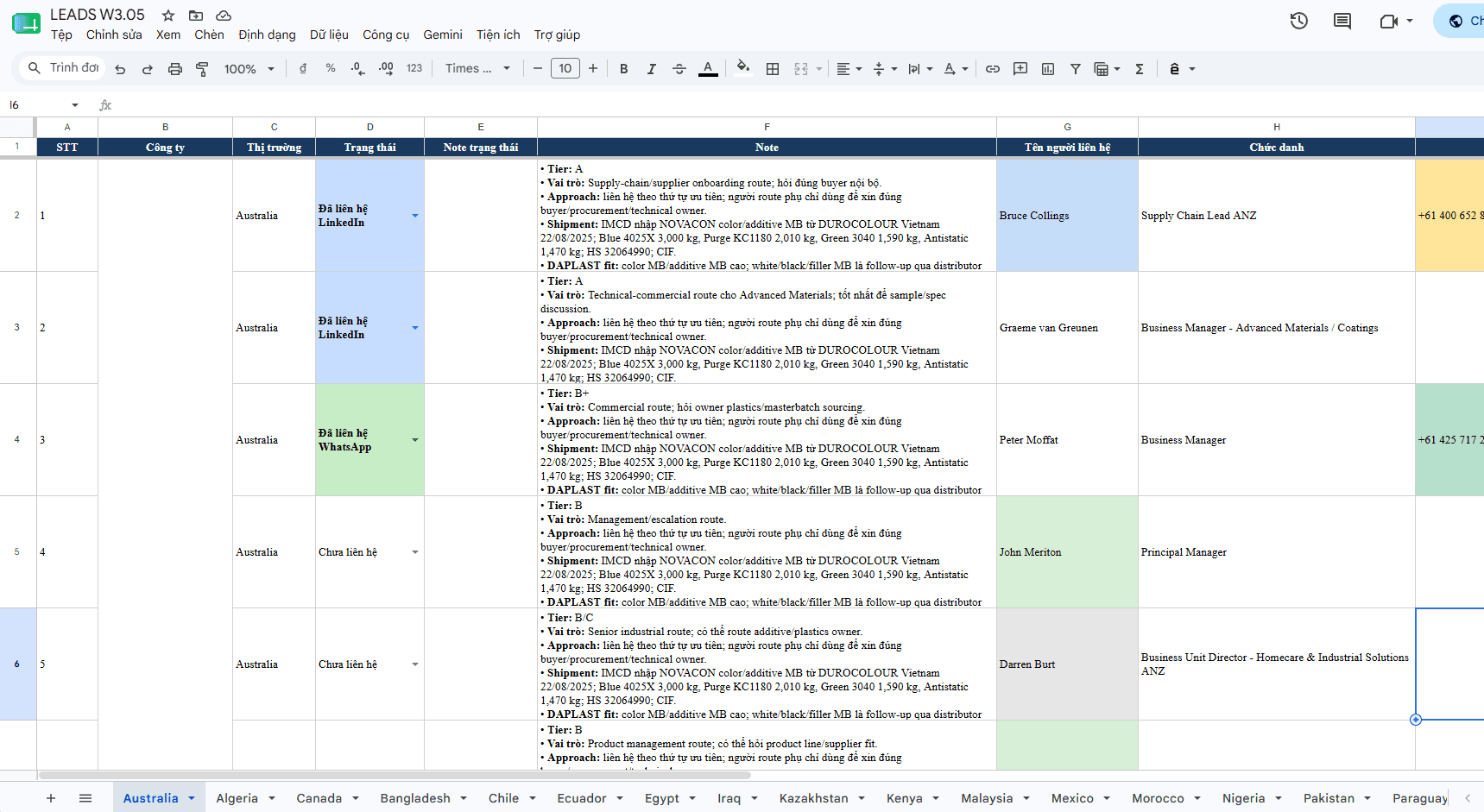
Beyond research, I automated the “paperwork”: AI-made, well-formatted Google Docs research reports and Google Sheets lead trackers (built with the Sheets/Docs API), plus auto-made weekly and monthly performance reports — turning raw AI output into clean documents and clear results.
Year :
2026
Industry :
Sales Ops / Business Automation
Client :
DAPLAST JSC
Project Duration :
2026
Problem :
AI research is only useful if two things happen.
First, it has to end up as clean, consistent documents that a busy person can actually act on — not raw text someone still has to reformat.
Second, someone has to check whether the AI is actually helping. In practice, formatting trackers, writing up research, and compiling weekly or monthly reports by hand is slow and easy to skip — so the documents get messy and the real impact never gets measured.

Solution :
I built automation (Python + the Google Workspace APIs), with Claude, that handles the “paperwork” end of an AI system. It creates formatted Google Docs research reports and links each one into the correct cell of a Google Sheets lead tracker. It also builds and styles the trackers themselves — merged blocks per company, a status-note column, thin borders, and notes in Vietnamese — following a fixed set of formatting rules so everything stays consistent. It can export Google Slides, and it compiles weekly and monthly performance reports on its own. It also tracks outreach results, such as reply rate, so the team can see exactly what the AI is delivering.


Challenge :
The hard part was making machine output look hand-made and trustworthy. That meant steady formatting, putting new data in the right place under the real rows (never overwriting old data, which is easy to get wrong), and making sure the numbers are correct. I wrote clear rules and small check scripts so the documents stay clean and the metrics are right. This is the same discipline a clinic needs for documents that go to patients and for reports that go to managers.
Summary :
This is the measuring-and-reporting half of an AI system — exactly the job tasks “standardize internal documents and SOPs” and “measure and report AI's impact on operations.” The same approach moves straight to a clinic: clean SOPs, clear patient documents, and regular, honest reports on what AI is changing.
More Projects


AI Implementation
AI-automated business documents and reporting
Beyond research, I automated the “paperwork”: AI-made, well-formatted Google Docs research reports and Google Sheets lead trackers (built with the Sheets/Docs API), plus auto-made weekly and monthly performance reports — turning raw AI output into clean documents and clear results.
Year :
2026
Industry :
Sales Ops / Business Automation
Client :
DAPLAST JSC
Project Duration :
2026
Problem :
AI research is only useful if two things happen.
First, it has to end up as clean, consistent documents that a busy person can actually act on — not raw text someone still has to reformat.
Second, someone has to check whether the AI is actually helping. In practice, formatting trackers, writing up research, and compiling weekly or monthly reports by hand is slow and easy to skip — so the documents get messy and the real impact never gets measured.
Solution :
I built automation (Python + the Google Workspace APIs), with Claude, that handles the “paperwork” end of an AI system. It creates formatted Google Docs research reports and links each one into the correct cell of a Google Sheets lead tracker. It also builds and styles the trackers themselves — merged blocks per company, a status-note column, thin borders, and notes in Vietnamese — following a fixed set of formatting rules so everything stays consistent. It can export Google Slides, and it compiles weekly and monthly performance reports on its own. It also tracks outreach results, such as reply rate, so the team can see exactly what the AI is delivering.
Challenge :
The hard part was making machine output look hand-made and trustworthy. That meant steady formatting, putting new data in the right place under the real rows (never overwriting old data, which is easy to get wrong), and making sure the numbers are correct. I wrote clear rules and small check scripts so the documents stay clean and the metrics are right. This is the same discipline a clinic needs for documents that go to patients and for reports that go to managers.
Summary :
This is the measuring-and-reporting half of an AI system — exactly the job tasks “standardize internal documents and SOPs” and “measure and report AI's impact on operations.” The same approach moves straight to a clinic: clean SOPs, clear patient documents, and regular, honest reports on what AI is changing.
More Projects
AI Implementation
AI-automated business documents and reporting
Beyond research, I automated the “paperwork”: AI-made, well-formatted Google Docs research reports and Google Sheets lead trackers (built with the Sheets/Docs API), plus auto-made weekly and monthly performance reports — turning raw AI output into clean documents and clear results.
Year :
2026
Industry :
Sales Ops / Business Automation
Client :
DAPLAST JSC
Project Duration :
2026
Problem :
AI research is only useful if two things happen.
First, it has to end up as clean, consistent documents that a busy person can actually act on — not raw text someone still has to reformat.
Second, someone has to check whether the AI is actually helping. In practice, formatting trackers, writing up research, and compiling weekly or monthly reports by hand is slow and easy to skip — so the documents get messy and the real impact never gets measured.
Solution :
I built automation (Python + the Google Workspace APIs), with Claude, that handles the “paperwork” end of an AI system. It creates formatted Google Docs research reports and links each one into the correct cell of a Google Sheets lead tracker. It also builds and styles the trackers themselves — merged blocks per company, a status-note column, thin borders, and notes in Vietnamese — following a fixed set of formatting rules so everything stays consistent. It can export Google Slides, and it compiles weekly and monthly performance reports on its own. It also tracks outreach results, such as reply rate, so the team can see exactly what the AI is delivering.
Challenge :
The hard part was making machine output look hand-made and trustworthy. That meant steady formatting, putting new data in the right place under the real rows (never overwriting old data, which is easy to get wrong), and making sure the numbers are correct. I wrote clear rules and small check scripts so the documents stay clean and the metrics are right. This is the same discipline a clinic needs for documents that go to patients and for reports that go to managers.
Summary :
This is the measuring-and-reporting half of an AI system — exactly the job tasks “standardize internal documents and SOPs” and “measure and report AI's impact on operations.” The same approach moves straight to a clinic: clean SOPs, clear patient documents, and regular, honest reports on what AI is changing.